photo:Thinglink 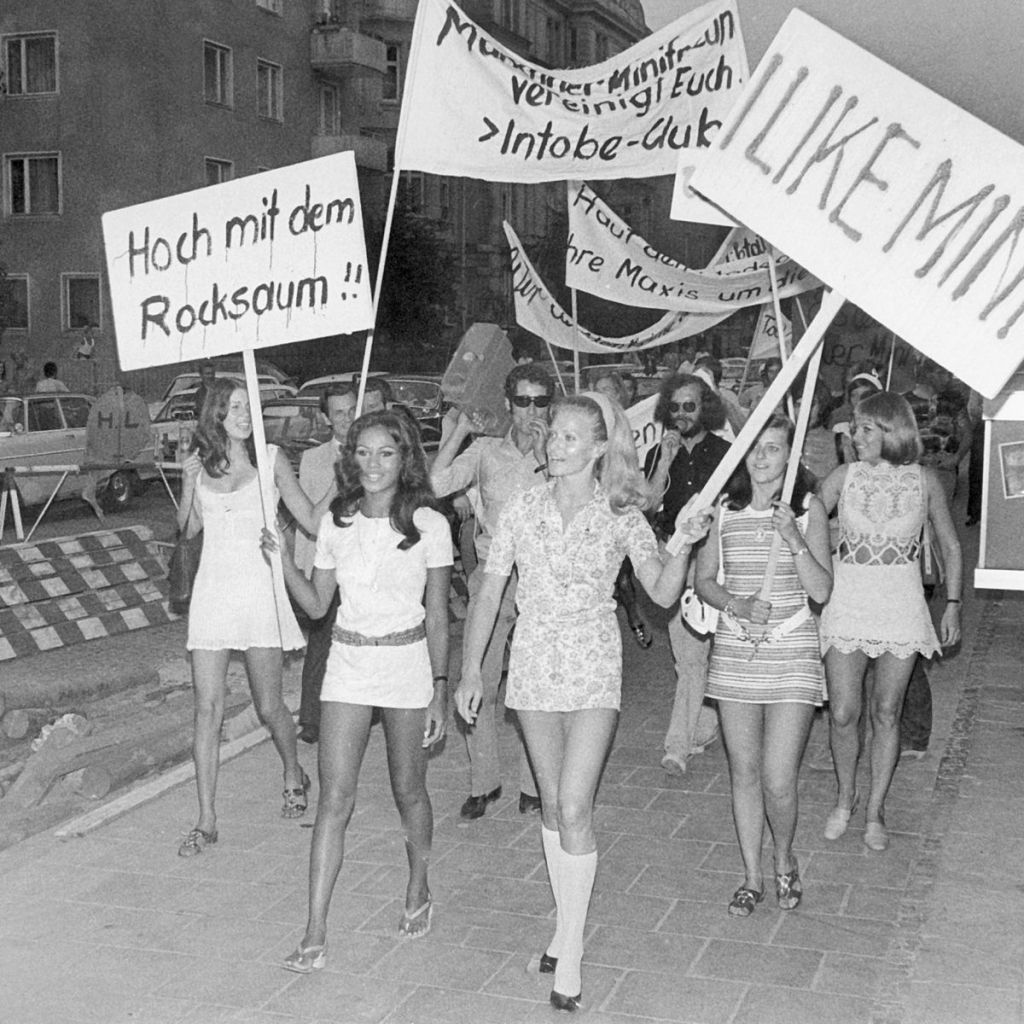
photo: NY Daily News
From the abolishment of corsets to the evolution of miniskirts, to the rise of power suits to the acceptance of lingerie as an outer garment, fashion has proved its efficacy in support of protesting against gender inequality and oppression throughout history.
As of today, we are not saying that no fabric in the fashion world devalues women, but most fashion houses have been and will continue to be extremely active with their support of female empowerment. Sure, one can argue that the business-head industry is being hypocritical, has been body shaming towards women, and its celebration of misogynists has plagued the industry. Fashion houses have been putting price tags on feminism, and it appears that the industry’s exploitation of feminism has only become more explicit.
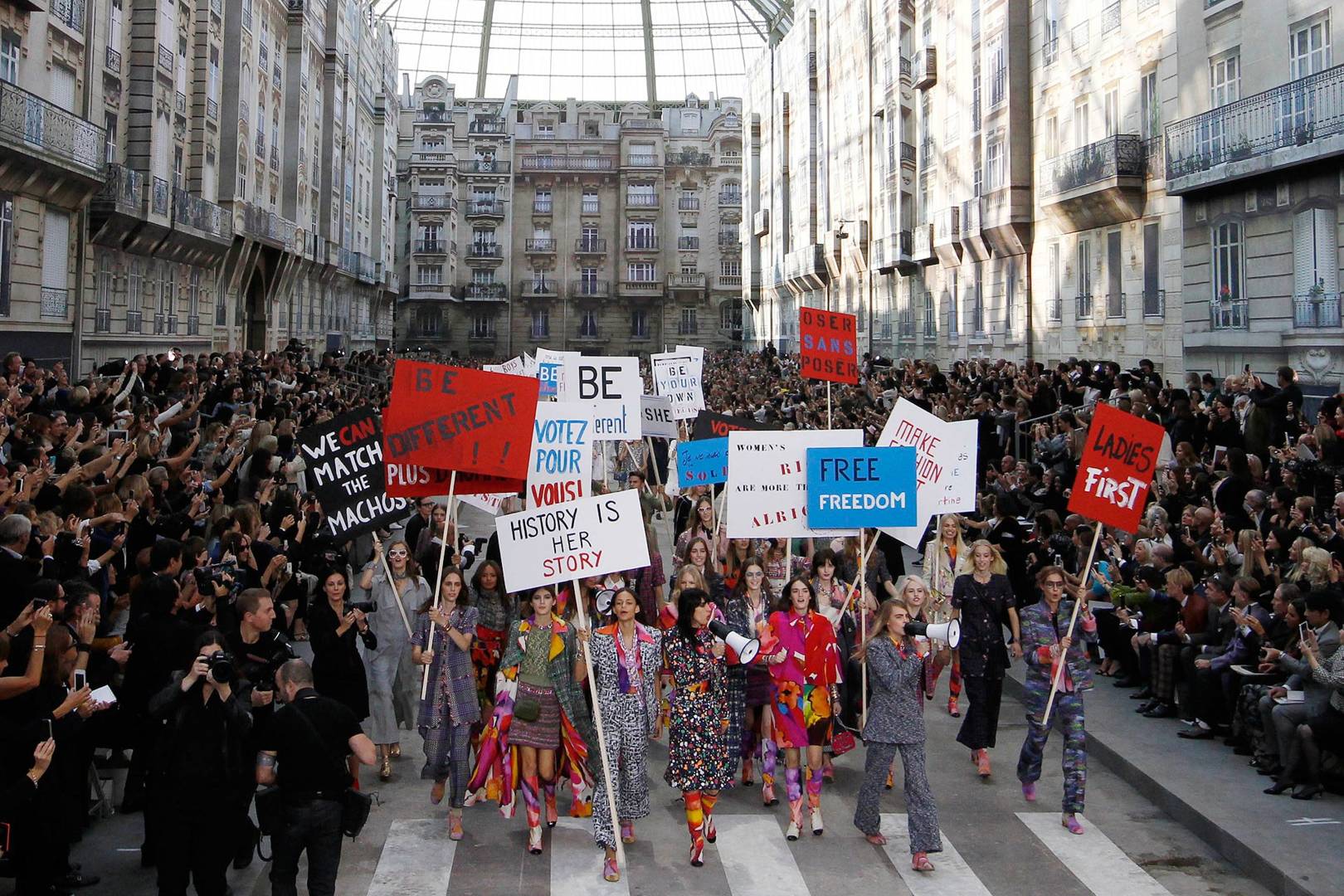
Chanel Runway SS15 Photo: Glamour UK 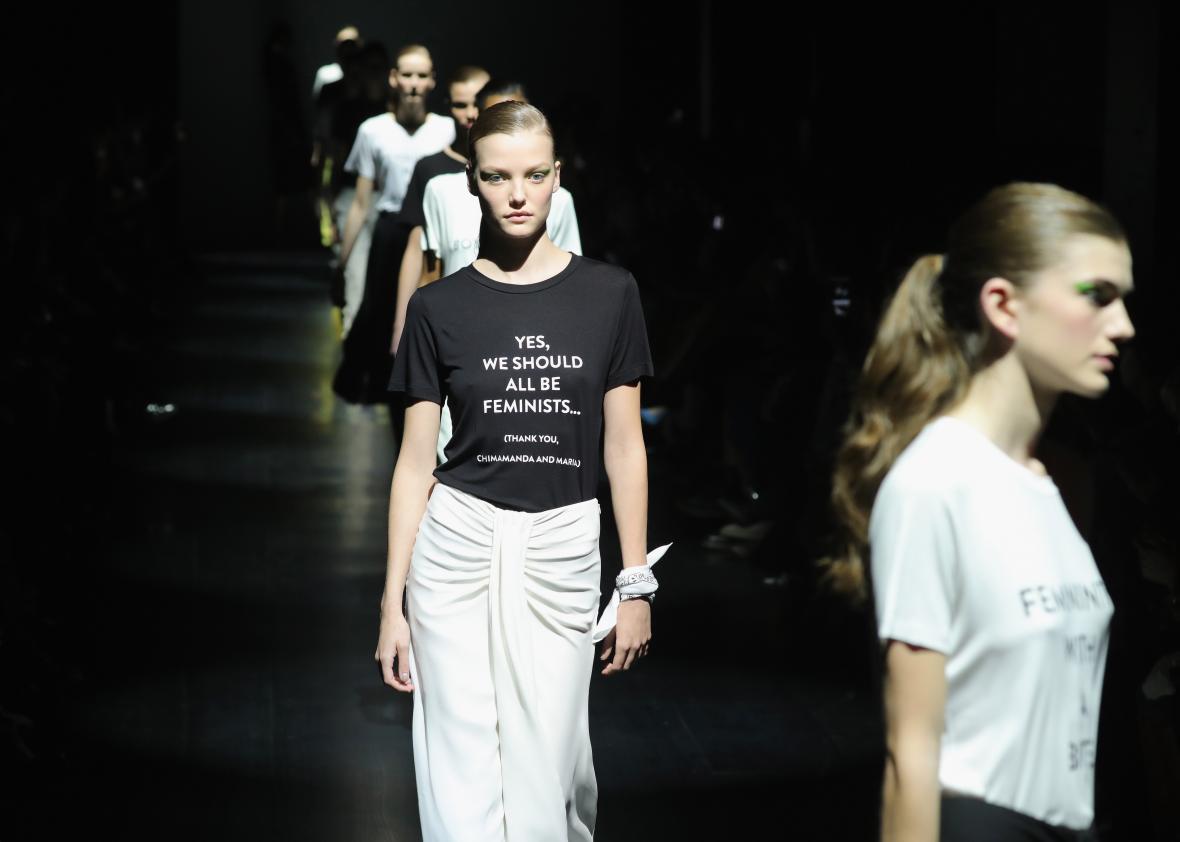
photo: slate.com
But undeniably, there were pinnacle moments that were real feathers in the cap of the fashion industry to be showing women’s solidarity and strength.
Namely, the mini skirt in the freewheeling 60s became allied to second-wave feminism. The decade was already being profoundly provocative and rebellious with hippie’s movement, black panther party, the youth-quake… and the ultra-high hemline presented by the British designer Mary Quant brought the revolution to its height. As mini-skirted women strolled down the street as they pleased, the gender climate was inevitably on the verge of transforming.
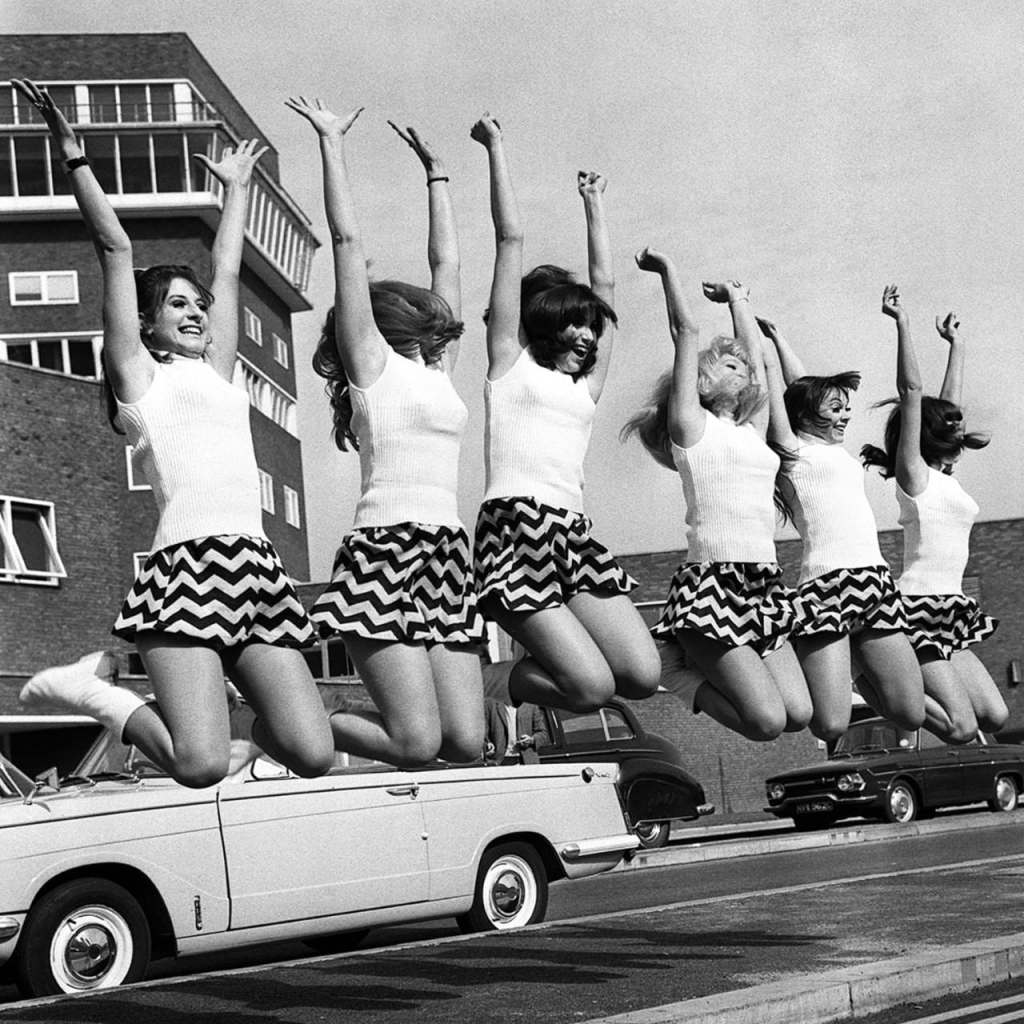
photo: telegraph.co.uk 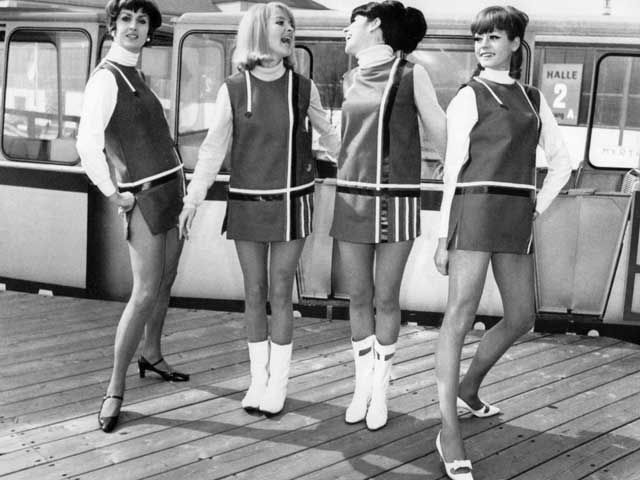
photo: pinterest
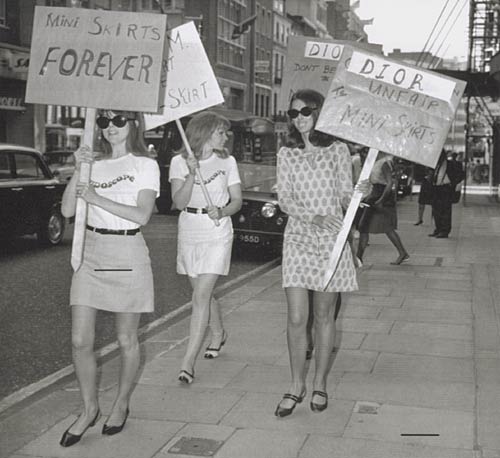
Young women began gaining awareness of self-expression and individuality, and they realized that clothing would be the most visible and direct form of expression. Hence the mini skirt became the dominant symbol of women’s liberation and youngster’s distinction from traditional morality. Activists such as Gloria Steinem sported the mini skirt during political rallies. At one point, miniskirts became so politicized that women protested outside of Dior’s showroom because Dior didn’t show miniskirts in their collection. They wielded signs reading ‘Mini skirts forever.’
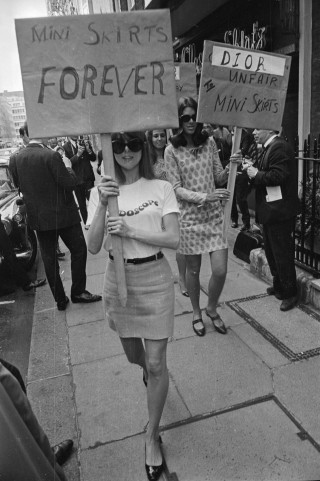
12th September 1966: Girls from the British Society for the Protection of Mini Skirts stage a protest outside the House of Dior, for its ‘unfair’ treatment of mini skirts. (Photo by Larry Ellis/Express/Getty Images)
Another highlight in the history of fashion as a robust political force was the birth of Denim Day. In 1992, a rape conviction was overturned because the chief judge deemed it was consensual sex simply because the victim was wearing tight jeans; thereby, she must have helped the person who raped her remove her jeans.
When Italian female law workers showed up in the Parliament wearing jeans in solidarity with the sexual assault victim, fashion as the most observable political tool once again attested its power in making social statements, and further upheld the movement against the misconceptions that surround sexual violence.
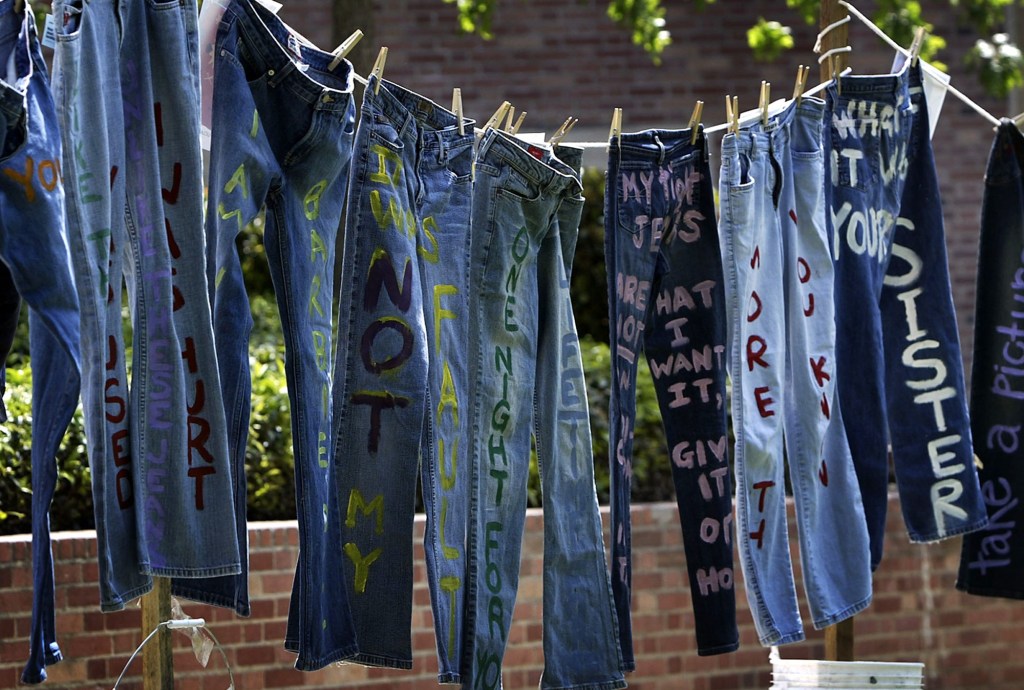
Blue jeans with messages challenging misconceptions about sexual violence, hung by the UCLA Clothesline Project, are seen on the University of California Los Angeles campus during Denim Day on April 21, 2004. David McNew / Getty Images file (Source: NBC News)
Feminists have used fashion for achieving emancipation and pushing the boundaries of traditional gender perceptions over the course of time. While the Women’s Movement has more to overcome, more women and men are taking a stand together for the future.
However, for an intricate, ever-evolving global industry that is capable of bringing serious issues to light, a distorted and destructive attitude towards racial justice has always been entrenched in the industry.
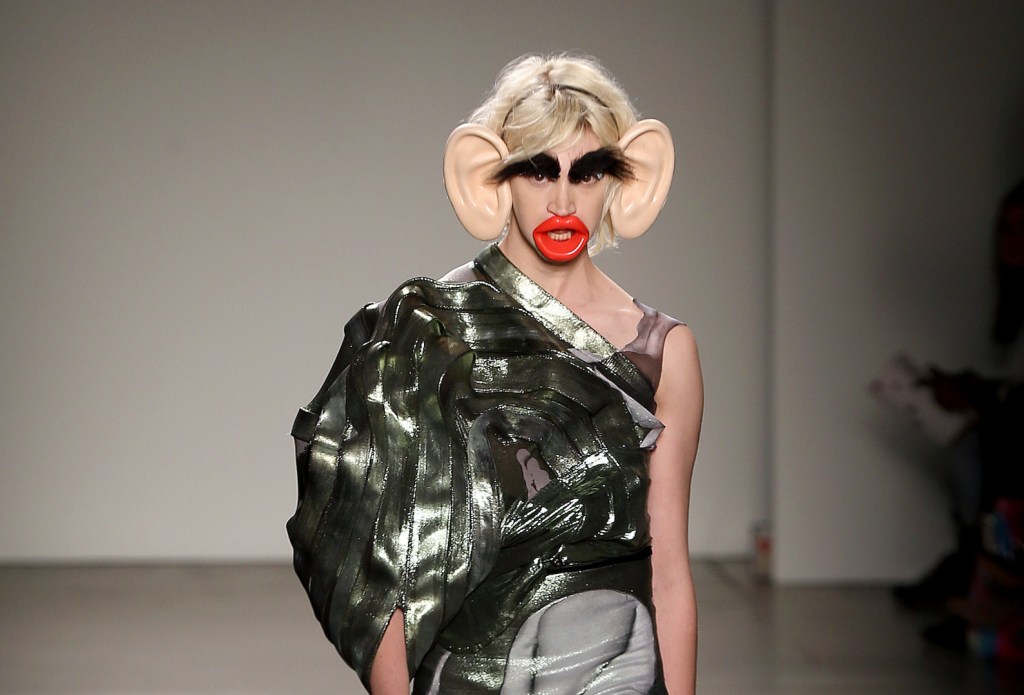
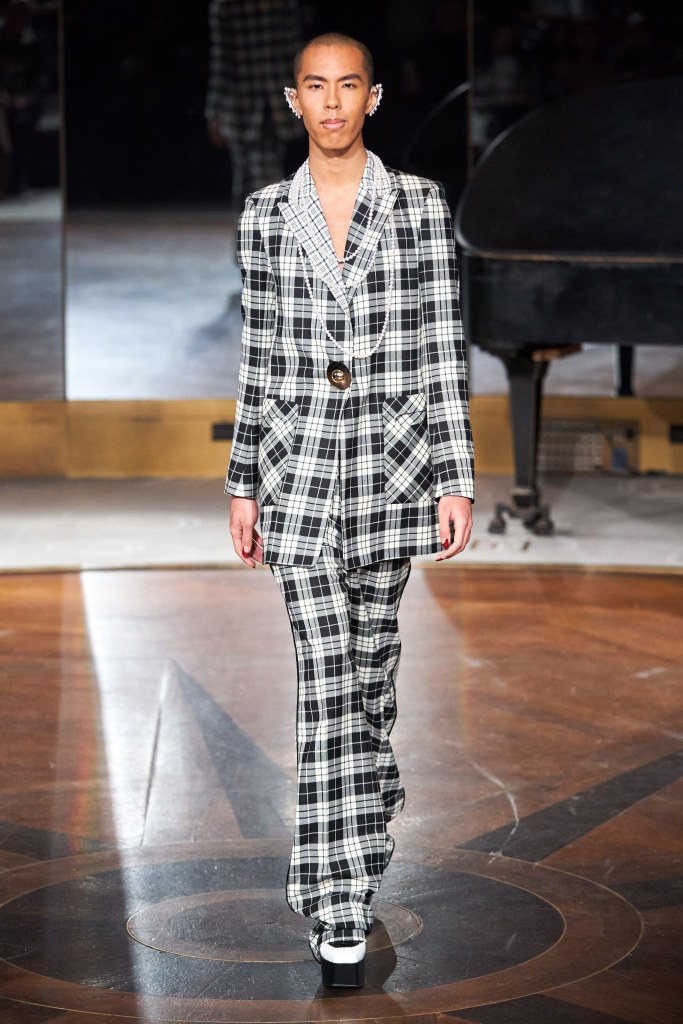
NEW YORK, NEW YORK – FEBRUARY 07: A model walks the runway wearing Junkai Huang during the Fashion Institute Of Technology’s Fine Art Of Fashion And Technology Show at Pier 59 Studios on February 07, 2020 in New York, New York. (Photo by Bennett Raglin/Getty Images for Fashion Institute Of Technology)
When a student designer from the world-prestigious Fashion Institute of Technology sent models down the runway wearing oversized red lips and “monkey ears,” it was more tragic than Shakespeare’s tragedies.
The designer’s ignorance aside, where are the advisors and directors? We certainly expect more from the institution. It’s not the scenario that demands someone to be black to recognize that this is something offensive. It’s scary to imagine that any professor in the country, regardless of race, would lack the most basic historical perspective. If there was one single black person in affiliation or in charge of this show, how is it that he/she could manage to turn a blind eye to this? Simple answer: Because there was not.
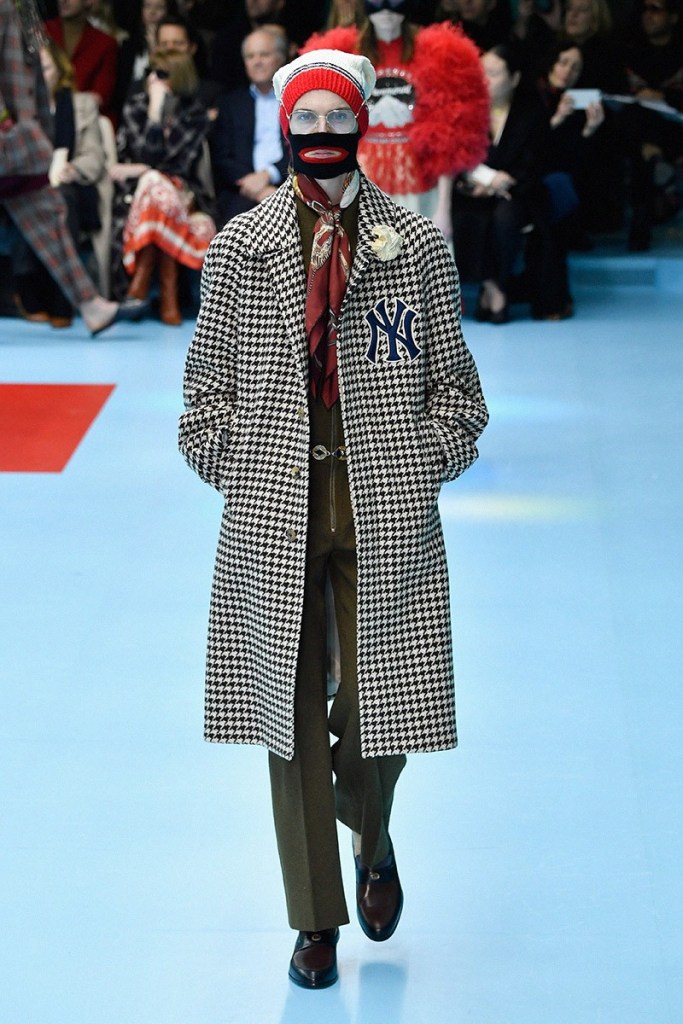
photo: standard.co.uk 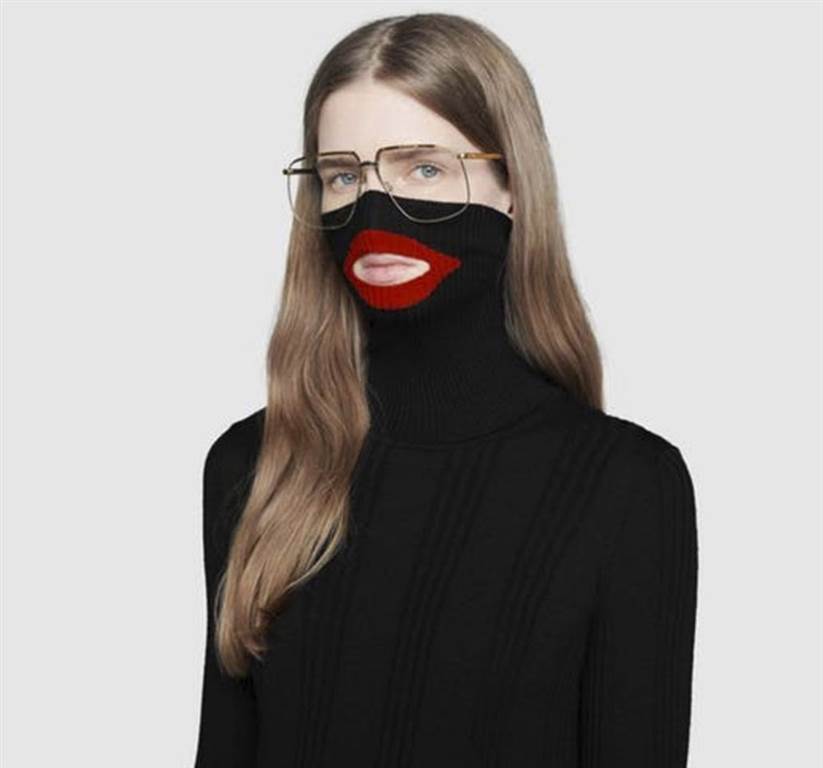
photo: NBC News
Alarm bells have kept ringing for the past two years: Gucci’s blackface sweater, its religiously ignorant “Indy Full Turban”, Prada’s denigrating blackface accessories, Dolce&Gabbana’s Chinese-disparaging ad campaign, and Vogue’s misidentifications of Asian actresses and Muslim journalist.
Shall we stop here, the list goes on. But the point is that these incidents hold up a mirror to the industry, and reflect its overwhelming whiteness and ingrained exclusivity towards racial minorities.
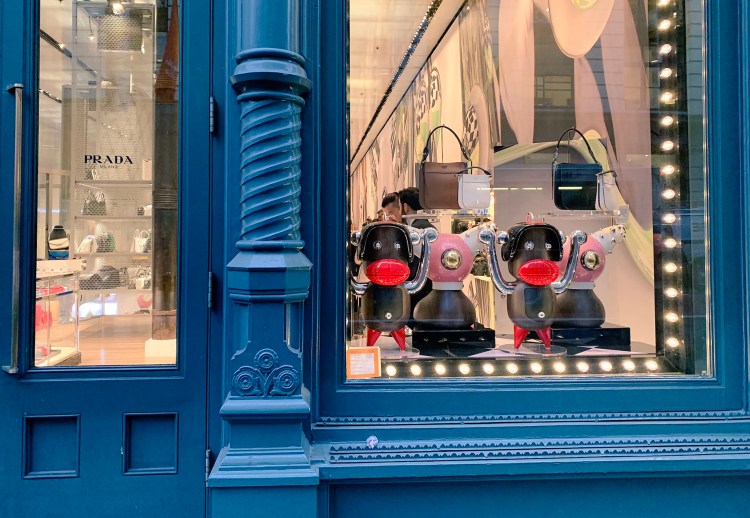
WashingtonPost: “Racially-charged items at the Prada’s Soho store. After a social media post and ensuing complaints, the company apologized and pulled the product.”(Photo by Chinyere Ezie) 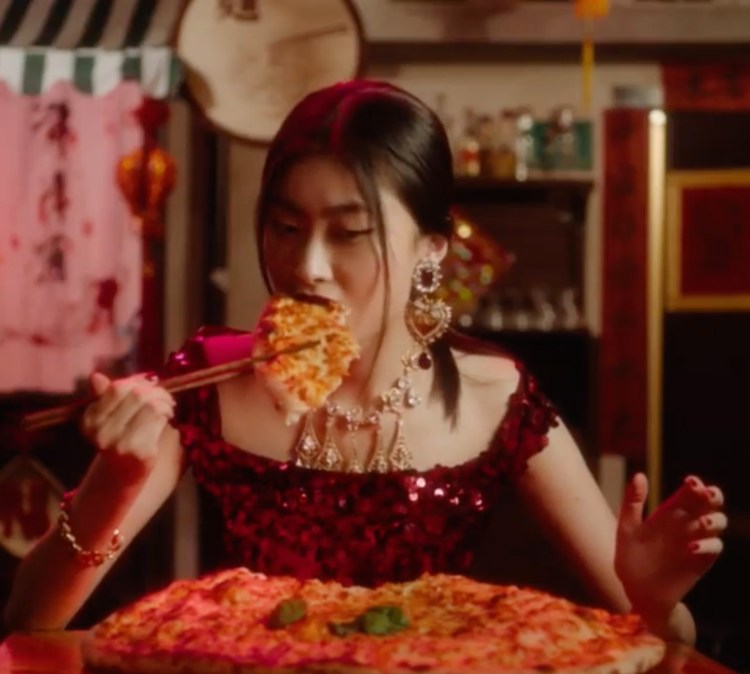
CNN:”A model is seen eating pizza with chopsticks in one of three videos posted on social media by Dolce & Gabbana.” Photo: Dolce & Gabbana
They sure did put more models of color on the runway in recent years, and there have been artistic directors of color on board. However, the deep, institutionalized “illness” cannot be fixed by the simple “cosmetic surgery”. It’ll only further the divergence if people feel obligated to bring representations for political correctness. Being woke does not make real equality. The state of mind that combat racial injustice should be rising from genuine respect and appreciation. And real inclusivity will never be achieved if the industry just keeps putting the group in the superior position and treating the representation of others as charity cases.
That being said, when it comes to promoting gender justice and female empowerment, we rest assured that the fashion industry is at hand. But in light of grappling with the proliferating racial abuse and prejudice amid COVID-19 pandemic, fashion, as it has proven to be a potent political force, does not set out to join forces with changing such circumstances.
Maybe the time hasn’t come. The industry is trembling enough. And it’s relieving and gratifying to see that the industry’s busy taking measures in support of healthcare workers. But when the desperate time is over—–
I wish, from the bottom of my heart, that another fashion piece will stick out and give people who have been the target of the crassness, a loud, visible political voice.












 The Beau Monde Express